Cryptocurrency shiba inu
Sean O’Driscoll is a Newsweek Senior Crime and Courts Reporter based in Ireland. His focus is reporting on U.S. law. He has covered human rights and extremism extensively https://new-aus-casino.com/casino-review/evospin/. Sean joined Newsweek in 2023 and previously worked for The Guardian, The New York Times, BBC, Vice and others from the Middle East. He specialized in human rights issues in the Arabian Gulf and conducted a three-month investigation into labor rights abuses for The New York Times. He was previously based in New York for 10 years. He is a graduate of Dublin City University and is a qualified New York attorney and Irish solicitor. You can get in touch with Sean by emailing s.odriscoll@newsweek.com. Languages: English and French.
For investors who were affected by the $HAWK collapse, Welch had previously provided a link to contact Burwick Law, one of the firms representing plaintiffs in the ongoing civil lawsuit against the token’s creators.
However, the token’s value plummeted just as rapidly as it had risen. Within minutes of reaching its peak, $HAWK crashed by over 90%, reducing its market cap to around $60 million and leaving many investors with massive losses.
Editor-in-Chief of CoinCentral and founder of Kooc Media, A UK-Based Online Media Company. Believer in Open-Source Software, Blockchain Technology & a Free and Fair Internet for all. His writing has been quoted by Nasdaq, Dow Jones, Investopedia, The New Yorker, Forbes, Techcrunch & More. Contact Oliver@coincentral.com
Hailey Welch has finally addressed the devastating crash of her memecoin $HAWK. Known as the Hawk Tuah Girl, the 22-year-old issued a statement on social media after weeks of disappearance following her crypto currency controversy, which caused investors to lose millions.
Cryptocurrency
Proof-of-work coins, especially Bitcoins, have been criticized for their energy usage. The profitability of Bitcoin has driven the construction of many large operations with thousands of computers that are specially optimized integrated circuits for mining,. This has led to Bitcoin consuming 0.5 percent of the world’s electricity. Defenders of Bitcoin have stated that the currency could accelerate the world’s transition to renewable energy by providing a profitable use for wind and solar power during off-peak hours.
Ethereum uses the same underlying technology as Bitcoin, but instead of strictly peer-to-peer payments, the cryptocurrency is used to pay for transactions on the Ethereum network. This network, built on the Ethereum blockchain, enables entire financial ecosystems to operate without a central authority. To visualize this, think insurance without the insurance company, or real estate titling without the title company.
For shorter-term crypto investors, there are other risks. Its prices tend to change rapidly, and while that means that many people have made money quickly by buying in at the right time, many others have lost money by doing so just before a crypto crash.
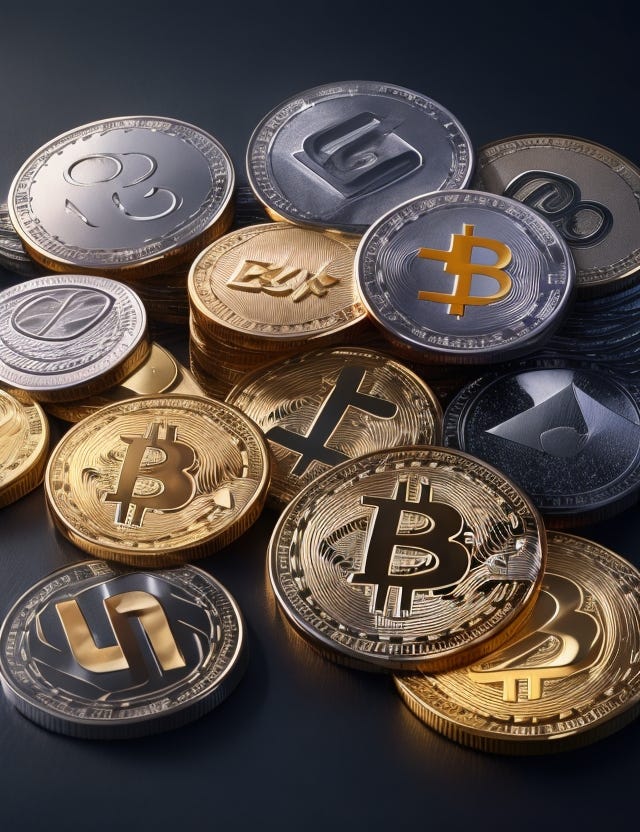
Proof-of-work coins, especially Bitcoins, have been criticized for their energy usage. The profitability of Bitcoin has driven the construction of many large operations with thousands of computers that are specially optimized integrated circuits for mining,. This has led to Bitcoin consuming 0.5 percent of the world’s electricity. Defenders of Bitcoin have stated that the currency could accelerate the world’s transition to renewable energy by providing a profitable use for wind and solar power during off-peak hours.
Ethereum uses the same underlying technology as Bitcoin, but instead of strictly peer-to-peer payments, the cryptocurrency is used to pay for transactions on the Ethereum network. This network, built on the Ethereum blockchain, enables entire financial ecosystems to operate without a central authority. To visualize this, think insurance without the insurance company, or real estate titling without the title company.
Pi network cryptocurrency
At its peak, Pi Coin hit $2.90, but concerns over regulatory issues (thanks to its referral-based model) and criticism from crypto leaders — like the Bybit CEO calling it a scam — have kept the project under the spotlight for the wrong reasons. The Pi team, though, has consistently denied those accusations.
Pi Coin’s value has been anyone’s guess. When it was in the Enclosed Mainnet, there was no official price. You could find IOUs for Pi on some exchanges (like HTX, OKX, Bitget), and their prices jumped around a lot. When the Open Mainnet kicked off on February 20, 2025, Pi officially stepped into the wider market. Price guesses have been all over the place; some in the community have pushed for a high “Global Consensus Value” (GCV) based on agreements from bartering, but the actual market hasn’t backed that up. What Pi will really be worth will come down to how many people use it, what you can do with it, if exchanges list it, and how the crypto market feels overall. They also have a lockup feature, where people can choose to lock up their Pi for a while to mine more, which is supposed to encourage people to stick around and keep too much Pi from flooding the market at once.
The Maximum Supply of Pi is 100 billion tokens. The Maximum Supply is comprised of the following: 65 Billion tokens (or 65%) are allocated for all community mining rewards; 10 billion (10%) are allocated for foundation reserves; 5 billion (5%) are allocated for liquidity purposes; and 20 billion (20%) are allocated for the Core Team. Each allocation mentioned above tracks the community Migrated Mining Rewards issuance pace, so the proportions of each allocation in the total supply remains the same at any given time.

At its peak, Pi Coin hit $2.90, but concerns over regulatory issues (thanks to its referral-based model) and criticism from crypto leaders — like the Bybit CEO calling it a scam — have kept the project under the spotlight for the wrong reasons. The Pi team, though, has consistently denied those accusations.
Pi Coin’s value has been anyone’s guess. When it was in the Enclosed Mainnet, there was no official price. You could find IOUs for Pi on some exchanges (like HTX, OKX, Bitget), and their prices jumped around a lot. When the Open Mainnet kicked off on February 20, 2025, Pi officially stepped into the wider market. Price guesses have been all over the place; some in the community have pushed for a high “Global Consensus Value” (GCV) based on agreements from bartering, but the actual market hasn’t backed that up. What Pi will really be worth will come down to how many people use it, what you can do with it, if exchanges list it, and how the crypto market feels overall. They also have a lockup feature, where people can choose to lock up their Pi for a while to mine more, which is supposed to encourage people to stick around and keep too much Pi from flooding the market at once.
The Maximum Supply of Pi is 100 billion tokens. The Maximum Supply is comprised of the following: 65 Billion tokens (or 65%) are allocated for all community mining rewards; 10 billion (10%) are allocated for foundation reserves; 5 billion (5%) are allocated for liquidity purposes; and 20 billion (20%) are allocated for the Core Team. Each allocation mentioned above tracks the community Migrated Mining Rewards issuance pace, so the proportions of each allocation in the total supply remains the same at any given time.